

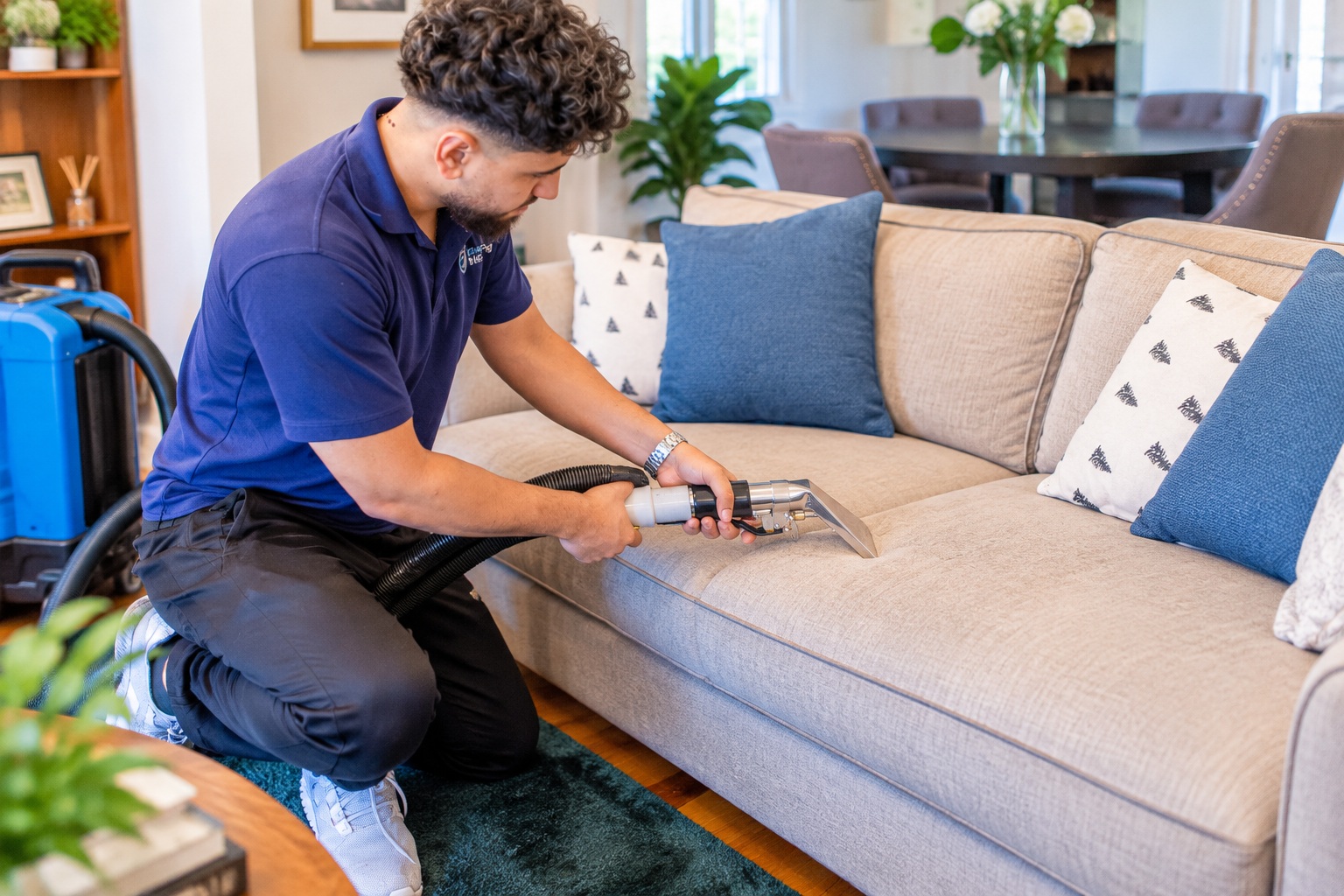
Upholstered furniture can be a significant investment and plays an important role in the comfort
and appearance of a home. Regular care helps prevent dirt and everyday soil from building up
in the fabric, while professional upholstery cleaning can provide a deeper clean when routine
vacuuming and spot care are no longer enough.
Professional upholstery cleaners use specialist equipment, cleaning products and methods
selected for the fabric being treated. A professional clean can help remove built-up soil, dust,
residues and some stains that ordinary household methods may struggle to deal with. Careful
inspection and testing also help reduce the risk of problems such as colour bleeding, shrinkage
or texture change.
In this blog, we explain what to expect when you hire a professional upholstery cleaning
company.
1. Complete Inspection of the Furniture
Before cleaning begins, the technician should inspect the upholstery, including the fabric,
seams, cushions and any visible areas of wear or damage. Existing marks, tears, weakened
areas or other concerns can then be discussed with the customer before work starts. This
allows the cleaning method to be adjusted where necessary and helps reduce the risk of
worsening pre-existing damage.
2. Identifying the Fabric Type
The technician should identify the fabric type and construction before selecting a cleaning
method. Manufacturer care labels can provide useful information, and appropriate tests may be
carried out in an inconspicuous area to check colourfastness or sensitivity to moisture. Natural
and synthetic fibres can react differently to cleaning, so this assessment helps the technician
choose a suitable method and reduce the risk of shrinkage, colour bleed or texture change.
3. Stain Identification and Pretreatment
Visible stains and heavily soiled areas are assessed before the main clean. Depending on the
type of stain and the fabric, the technician may apply a suitable pre-treatment or specialist
spotting product and gently work it into the affected area. Pre-treatment can improve the result,
but some stains may be permanent and complete removal cannot always be guaranteed.
4. Deep Cleaning
The main cleaning method depends on the upholstery material and its condition. Suitable
fabrics may be cleaned using controlled hot-water extraction, while other materials may require
a lower-moisture or alternative specialist method. The aim is to remove as much soil and
residue as practical without over-wetting the fabric. Professional cleaning can improve the appearance and freshness of upholstery, although results will vary according to the fabric, age,
wear and type of soiling.
5. Drying Time
After wet cleaning, upholstery will normally remain damp for a period of time. Drying time
depends on the fabric, the amount of moisture used, room temperature, ventilation and airflow.
Good ventilation can help speed up drying and reduce the chance of musty odours developing.
Customers should avoid using the furniture until it is fully dry.
6. Final Walkthrough
Once the cleaning is complete, the technician can review the furniture with the customer, check
the cleaned areas and point out any stains, wear or permanent marks that remain. This is also
an opportunity to provide simple aftercare advice and answer any questions about drying or
future maintenance.
Revive Your Older Furnishings With Professional Upholstery Cleaning Services
Every upholstery fabric is different, so the cleaning method should be selected according to the
material, condition and manufacturer guidance where available. Fresh Kleaning assesses the
furniture before cleaning and uses an appropriate professional method for the fabric being
treated. Stains are treated where suitable, although full removal cannot be guaranteed in every
case. Contact Fresh Kleaning for an upholstery cleaning quote based on your furniture and
requirements.


